
Thinking about solar power in Auckland but put off by the upfront cost? It’s time for an update. Equipment costs have fallen and power prices keep rising. On top of that, most major banks now offer low-interest green loans. As a result, 2026 is one of the best years yet to make the switch, whether you own a home in Howick or run a business in Pakuranga.
French Electrical has been wiring Auckland homes and businesses since 1974. Over those 50+ years, solar has gone from a niche, expensive add-on to a mainstream investment that pays for itself. This guide covers why Aucklanders are going solar, how the technology works, and what our supply and install process looks like. It also sets out the finance options banks offer right now, for both homeowners and businesses.
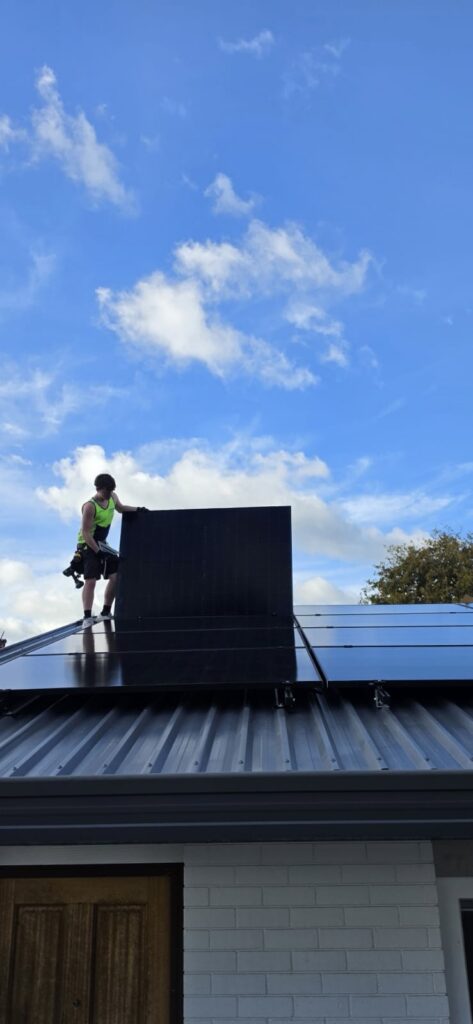
Why Auckland Homes and Businesses Are Switching to Solar Power
Auckland gets plenty of usable sun across the year. With electricity prices trending upward, the maths on solar power in Auckland has quietly become very favourable. Here’s what’s driving the switch:
- Lower power bills. Every kilowatt-hour your solar power system generates is one you’re not buying from the grid. For most homes, solar can offset a significant chunk of daytime electricity use straight away.
- Protection from rising electricity prices. Once your system is in, a large part of your energy cost is locked in. You generate it yourself, so future price rises matter less.
- Money back for what you don’t use. Any power you don’t use goes back to the grid. Your retailer then pays you a “buy-back” or export rate for it (more on this below).
- Energy independence. Add a battery and you rely far less on the grid. Depending on the setup, you can also have backup power during outages.
- A genuine boost to property value. Buyers increasingly see a well-installed solar system as a valuable, low-maintenance upgrade, much like double glazing or a heat pump.
- Lower emissions. If you want to cut your environmental footprint, solar is one of the most tangible changes you can make.
- EV synergy. If you have an EV or plan to get one, solar can also offset a good share of your home EV charging costs.
How Solar Power Works in Auckland Homes
Solar is simpler than most people expect. A residential or commercial solar system generally comes down to four parts:
- Solar panels (the PV array). Panels are made up of photovoltaic cells that convert sunlight directly into DC (direct current) electricity. The more sun hours your roof gets, and the better the panels are angled and oriented, the more power you generate.
- The inverter. Your home and the grid run on AC (alternating current), so an inverter converts the DC electricity from your panels into usable AC power for your appliances, lighting, and equipment.
- Self-consumption and export. Power your panels generate is used in your home or business first. Anything you’re not using in that moment is exported to the grid, and this is where your buy-back rate comes in, since your retailer pays you for that exported electricity. Export/buy-back rates currently range from roughly 8c to 25c per kWh depending on your retailer and plan, so it’s worth checking what your provider offers.
- Battery storage (optional). A battery lets you store the power you generate during the day to use in the evening, rather than exporting it at the (usually lower) buy-back rate and buying it back later at the higher retail rate. It’s not essential, but it significantly increases self-consumption and energy independence.
On typical residential systems without a battery, most Kiwi homeowners self-consume around half of what they generate and export the rest. Under those conditions, EECA estimates a payback period of roughly 7 to 9 years for a well-sized residential system; after that, the electricity you generate is essentially free for the remaining lifespan of the panels (typically 25+ years).
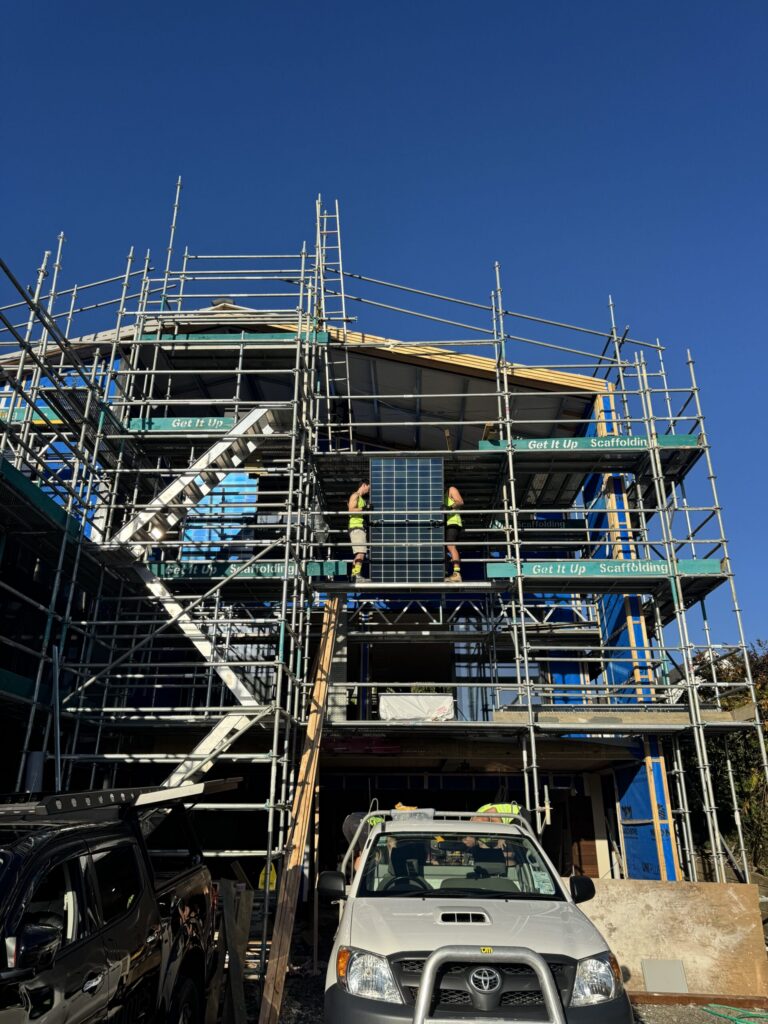
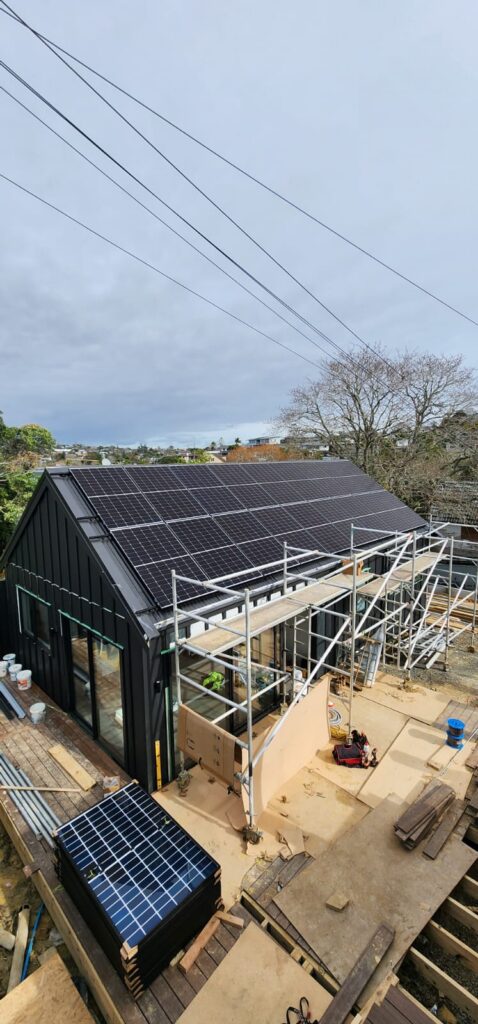
Solar Supply and Installation from French Electrical
We treat solar the same way we treat every other job: no shortcuts, and work that’s built to last. As registered Master Electricians, our solar service covers:
- Design and system sizing: based on your roof, your power usage patterns, and your budget, so you’re not over- or under-sizing your system.
- Supply: we source quality panels, inverters and (where wanted) battery storage suited to New Zealand conditions.
- Installation: carried out by our own registered electricians, not subcontracted out to whoever’s cheapest that week.
- Grid connection and compliance: we handle the paperwork and sign-off with your lines company and retailer.
- Ongoing support: because a system is only as good as the people who stand behind it after it’s switched on.
What Sets Us Apart

50+ Years of Proven Experience
Established in Auckland since 1974, French Electrical has been trusted across the region for over 50 years. Our team of registered Master Electricians delivers work that's built to last every time.

24/7 Emergency Response
Electrical breakdowns don't keep business hours. French Electrical keeps an electrician on call outside office hours for residential, commercial and industrial clients across Auckland, responding fast to minimise downtime and protect your property.

SiteWise 100 Certified
French Electrical holds SiteWise 100 certification — New Zealand's highest contractor health and safety rating. This is required by many commercial, industrial and government clients and reflects our commitment to safe worksite practice.

$20,000 Workmanship Guarantee
As Quality Assured members of Master Electricians, our residential work carries a $20,000 workmanship guarantee. If anything falls short of standard, we put it right — labour and materials — at no cost to you.
Financing Solar Power in Auckland: What NZ Banks Offer in 2026
This is where things have changed the most in the last couple of years. Most major New Zealand banks now offer dedicated “green loans” specifically for solar, batteries, and other energy upgrades, often at interest rates well below their standard lending
For Homeowners
- Westpac Greater Choices Home Loan: 0% p.a. interest, up to $50,000, over 5 years, no establishment fee and no early repayment costs. Generally requires a mortgage with Westpac (or willingness to move it) and at least 20% equity (40% for investment properties).
- ANZ Good Energy Home Loan: 1% p.a., up to $80,000, over 3 years. Requires an ANZ mortgage (or willingness to switch) and at least 20% equity.
- BNZ Green Home Loan: 1% p.a., up to $80,000, over 3 years. A setup fee may apply (around $150 for new customers, less for existing BNZ mortgage holders).
- ASB Better Homes Top-Up: 1% p.a., up to $80,000, over 3 years, minimum 20% equity, a $99 top-up fee typically applies.
- Kiwibank Sustainable Energy Loan: uses Kiwibank’s standard variable home loan rate rather than a discounted rate, over a longer 7 to 10 year term, but Kiwibank contributes up to $2,000 towards your system’s cost over four years if you borrow more than $5,000
.
All of these top-up loans are generally only available if your mortgage is (or will be) with that bank, so it’s worth checking what your current lender offers before shopping around. There are also interest-free finance options through retail credit cards (such as Q Card and Gem Visa) offered by some solar suppliers. These can work well if you clear the balance before the interest-free period ends, but the rates that kick in afterwards (often 22 to 29% p.a.) are steep, so they need to be used carefully. If your bank doesn’t offer a green loan, a standard personal loan is also worth comparing. The interest rate is usually higher than a mortgage top-up, but because the term is much shorter, the total interest paid can sometimes work out lower.
For Businesses
Solar finance for Auckland businesses has matured a lot too, with four main routes:
- Green business loans: ASB, BNZ, Westpac and ANZ all offer commercial versions of their green loans. Examples include the ASB Smart Solar Loan (up to $150,000 interest-free over 5 years for farms and rural businesses), the BNZ Green Business Loan and ANZ Business Green Loan (both up to $80,000 at 1% p.a. over 3 years), and Westpac’s Greater Choices loan extended to commercial solar and battery installs (up to $50,000 interest-free over 5 years).
- Outright purchase: the highest long-term return, with no interest cost and full access to the IRD’s Investment Boost, which lets a business immediately deduct 20% of the system cost from taxable income in year one, on top of standard depreciation (worth confirming the specifics with your accountant).
- Power Purchase Agreements (PPAs): a zero-upfront option where a provider installs and owns the system, and you simply buy the power it generates at a fixed rate, typically 15 to 25% below your current grid tariff, locked in for 10 to 20 years. You don’t get the Investment Boost since you don’t own the asset, but there’s no capital outlay and no performance risk.
- Operating leases: keeps the system off your balance sheet as a predictable monthly cost rather than a capital expense, with the option to purchase, renew, or remove the system at the end of the term.
Which option makes sense depends on your business’s cash flow, tax position and appetite for owning the asset outright. It’s worth running the numbers with your accountant before committing either way.
Solar power Auckland FAQs
How does solar power work?
Solar panels turn sunlight into DC electricity. An inverter then converts it to AC power, which feeds through your switchboard to your lights and appliances. Your home uses that power first. Anything left over goes back to the grid, and your power retailer pays you a buy-back rate for it.
What size solar system do I need in Auckland?
It depends on how much power you use, when you use it, and how much roof space faces the sun. The best guide is your last year of power bills. For solar power in Auckland, we size the system around your daytime use, because using your own solar power is worth more than exporting it. A battery changes the sums if you use most power at night.
How much does solar power cost in Auckland?
The price depends on the system size, the panels and inverter, whether you add a battery, and how easy your roof is to work on. Because those vary so much, we quote each job after looking at your bills and roof. Low-interest bank loans can also spread the cost. For our callout rates, see what an electrician costs in NZ.
Do I need a battery with solar panels?
No, a battery is optional. Without one, you use solar power during the day and export the rest. A battery stores that surplus for the evening and can give backup power in an outage, depending on the setup. However, it adds significant cost, so it suits homes with high evening use or a need for backup.
Does solar power work on cloudy days?
Yes, but at lower output. Panels still generate from diffuse light on overcast days, just less than in full sun. Over a year, Auckland gets plenty of usable sunlight for solar power to make sense. Your system’s annual output, not any single day, is what drives your savings.
Can I get a loan for solar power in NZ?
Yes. Most major New Zealand banks now offer green loans or mortgage top-ups for solar, batteries and other energy upgrades, often at low interest. They usually need your mortgage to be with that bank. Businesses can also use green business loans, leases or power purchase agreements. See the finance section above, and confirm current terms with your bank.
Do I need to upgrade my switchboard for solar?
Sometimes. Solar needs space on the switchboard for its own protection, and an older or full board may not have it. Boards with ceramic fuses or no RCD protection usually need upgrading first. We check this when we quote. Here are the signs your switchboard needs upgrading.
Who can install solar power in New Zealand?
The electrical side of a solar installation is prescribed electrical work. As a result, a registered electrician has to connect and certify it. Every solar power installation we do in Auckland is certified, and you should receive a Certificate of Compliance and an Electrical Safety Certificate. Exporting to the grid also needs approval from your lines company, which we arrange as part of the job.
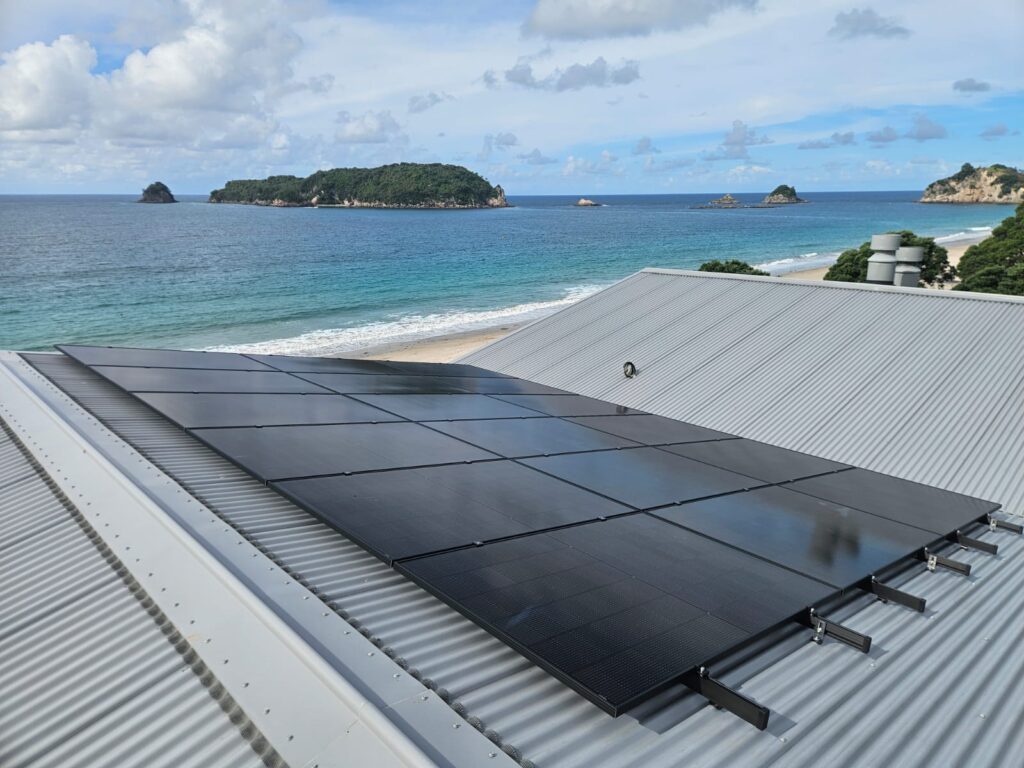
Is Solar Power Worth It in Auckland?
For most homes and businesses, yes, particularly with 0 to 1% p.a. bank finance now on the table, which means your loan repayments can often be lower than the power bill savings you’re making from day one. The exact payback period depends on your roof orientation, your household or business’s usage patterns, and your retailer’s buy-back rate, but 7 to 10 years is a realistic expectation for a well-designed residential system, with 25+ years of panel life remaining after that.
Get a Free Solar Quote
If you’re weighing up solar for your Auckland home or business, we’re happy to talk through what a system would look like for your property, how it could be financed, and what the numbers look like over time. Book a job or request an estimate with French Electrical today, or give us a call on 09 274 8082. You can also book a job online or see our pricing.
This article is general information current as of 2026. Bank interest rates, loan terms and eligibility criteria change regularly, so please confirm current details directly with your bank before applying. Tax treatment of business solar investments should be confirmed with your accountant.