Heat pumps do more than most Auckland homes ask of a single appliance: heating in July, cooling in February, and running quietly enough to leave on overnight. Getting that performance depends on decisions most homeowners never see: unit sizing against room volume, where the outdoor compressor sits, and how the circuit feeding it is run. Get any of that wrong and you end up with a heat pump that runs constantly, costs more to operate, or trips out under load. Our team sizes, positions, and wires every installation to the manufacturer’s spec and the Electrical Code, so the unit performs the way the brochure promised. We do the same wiring and circuit work for split-system air conditioning, if cooling is the priority.
Heat Pump or Air Conditioning?
Not every home needs a heat pump — if you only need cooling, a straight air conditioning unit is usually the cheaper install and the cheaper unit to run. Heat pumps earn their keep once winter heating comes into the picture, since one appliance replaces both a heater and an air conditioner. Not sure which fits your place? Our team can talk you through it — and we do the wiring and circuit work for cooling-only air conditioning as well, which is covered further down this page.
Benefits of Air Conditioners
- Renews and improves air quality
- Constant pleasant room temperature
- The most efficient way to cool homes
Heat Pump Installation
The best way to stay warm through an Auckland winter is a premium heat pump system. Unlike a straight air conditioner, a heat pump both heats and cools, so one appliance covers you all year round. Set the temperature you want and the system holds it, whether that’s taking the chill off a July morning or cooling the house down in February.
Benefits of Heat Pumps
- Lower running costs and long-term savings on energy
- Less maintenance than traditional heating services
- Provide cooling during summer
- Long lifespan
Air Conditioning & Heat Pump Installation
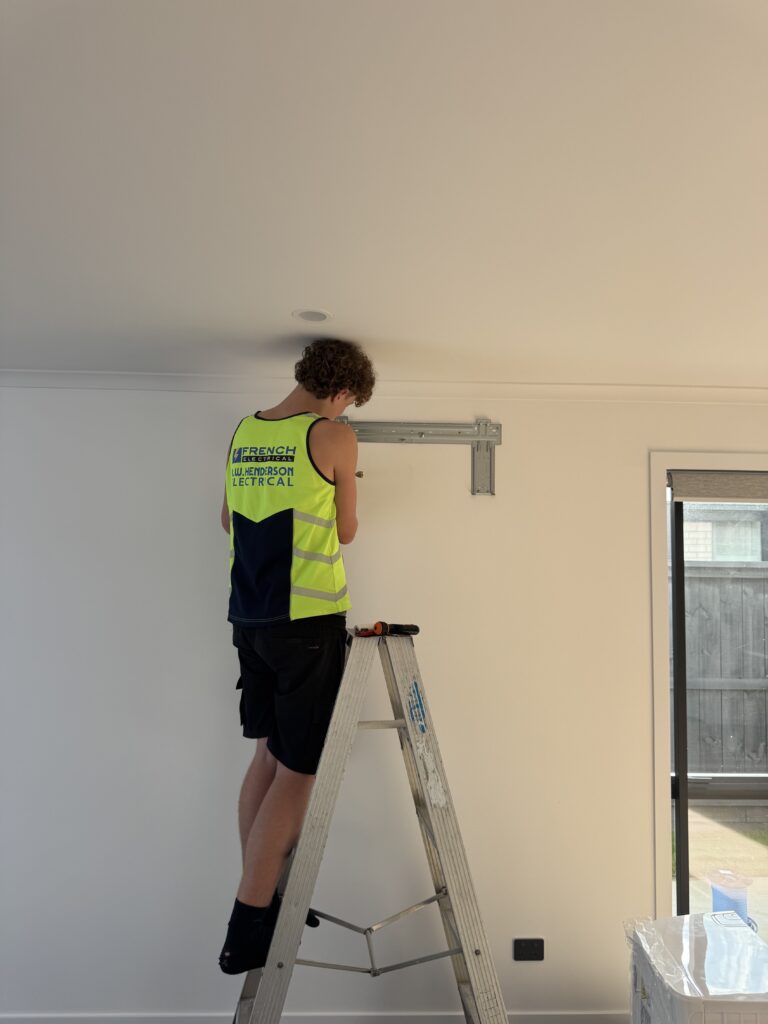
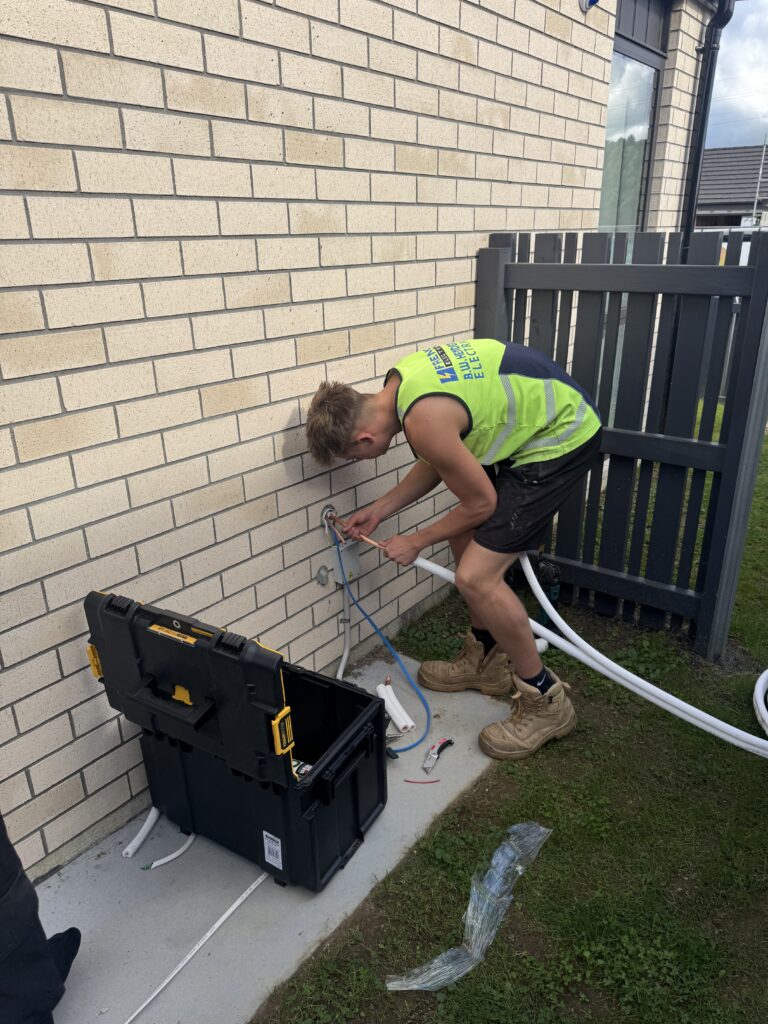
Getting the installation right matters as much as the unit itself. Our electricians take into account your home’s layout, room size, and existing electrical capacity, along with unit brand, size, and placement, to work out the best option for your budget. That means a system that’s sized correctly, wired to code, and set up to run efficiently rather than working overtime to make up for a poor installation.
Aircon and Heat Pump Services
Like a routine check-up, your heat pump should be serviced yearly to keep it running efficiently. We check the electrical and mechanical operation of both the indoor and outdoor units, and make sure everything is in good working order. A thorough inspection typically takes about an hour.
Read our winter hacks to get the most out of your heat pump for tips on running your unit more efficiently.
A heat pump system isn’t the right fit for every home. Our electricians are happy to examine your property and talk through other options, including home ventilation systems.
We offer free estimates and quotes, so get in touch with one of our Registered Master Electricians today.
Ducted Systems for Whole-House Heating
A high-wall unit only ever heats the room it is in. On the larger renovations and new builds we wire through the eastern suburbs — the four and five-bedroom homes around St Heliers, Glendowie and Orakei, and the bigger Flat Bush and Whitford builds — that means either a head in every room or a house that is comfortable in one place and cold everywhere else.
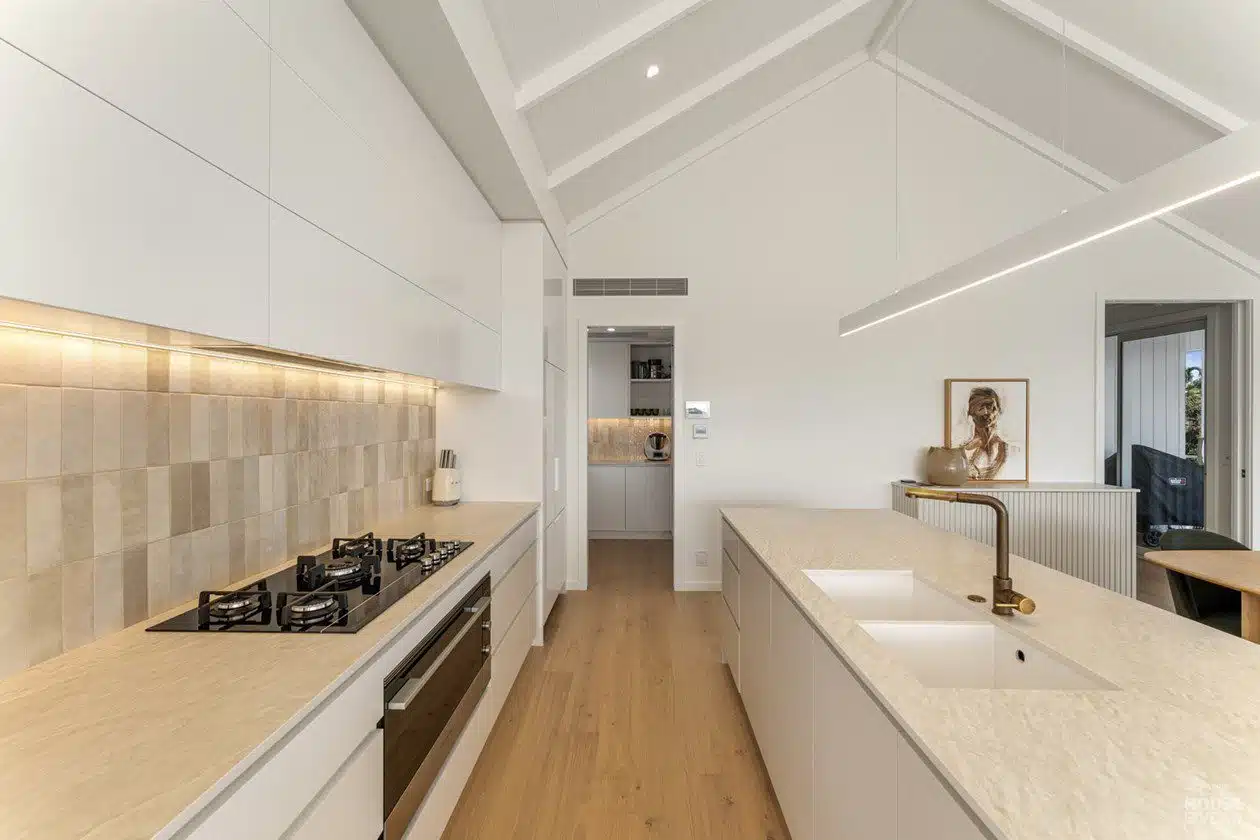
A ducted system puts the plant out of sight in the roof space and delivers conditioned air to every room through slim outlets, zoned so bedrooms are not being heated while nobody is in them. It costs more to install and it wants planning early, ideally while the framing is still open and the ductwork can be run properly. Across a large floor plan it is usually both cheaper to run and far better to live with than several units competing with each other.
We install single-split, multi-split and fully ducted systems, and retrofit ducted into existing roof spaces where there is height to work in.
Air Conditioning Installation and Wiring
Most of what goes wrong with an air conditioning installation has nothing to do with the brand on the wall. It is the circuit behind it — undersized cabling, a circuit that is already loaded, or a hurried connection at the isolator. None of that shows on day one. It shows up months later as a breaker that trips on the hottest afternoon of the year, a unit that cycles oddly, or a fault sitting behind a wall lining.
Every electrician on our team is registered with the Electrical Workers Registration Board, so the work is done to the New Zealand Electrical Code rather than to whatever the unit’s instruction sheet assumes.
For a new system we look at room size, insulation and the capacity already on your switchboard before recommending anything, then run a dedicated circuit and isolator sized for the unit. For an existing system we service, fault-find and repair — checking the electrical and mechanical operation of the indoor and outdoor units, cleaning, and testing for leaks.
Heat Pump & Air Conditioning FAQs
Does a heat pump meet the Healthy Homes heating standard?
Does a heat pump meet the Healthy Homes heating standard?
Yes, provided it is fixed, has a thermostat and is sized correctly. The standard requires one or more fixed heaters able to heat the main living room to 18°C, with a minimum capacity of 1.5 kW and enough capacity to meet the calculation for that particular room. A heat pump with a thermostat qualifies; an open fire or an unflued portable LPG heater does not. Fixed electric heaters cannot be used where the required capacity is above 2.4 kW, except as top-up heating — which is why a heat pump is usually the answer in a larger living room. We can run the calculation for your room before you buy anything.
Ducted or high-wall — which suits my house?
Ducted or high-wall — which suits my house?
A high-wall unit is the cheaper option and heats the room it is mounted in. Ducted makes sense once the floor plan gets large enough that the alternative is a head in every room — it runs from plant in the roof space to outlets in each room, zoned so you are not heating empty bedrooms. Plan it early if you can; retrofitting is possible where the roof space has the height for it.
What size heat pump do I need?
What size heat pump do I need?
It depends on the volume of the room rather than its floor area alone. Ceiling height, glazing, insulation and which way the room faces all change the answer. An undersized unit runs flat out and never quite gets there; an oversized one short-cycles, which is noisy and hard on the compressor. We measure the room and size against the manufacturer’s data rather than working off a rule of thumb.
Does a heat pump need its own circuit?
Does a heat pump need its own circuit?
Almost always. A heat pump should run on a dedicated circuit from the switchboard with its own isolator, sized for the unit’s draw. If your board is already full, or still has old rewireable fuses, that work needs doing first — we will tell you at quote stage rather than on installation day.
How much does heat pump installation cost?
How much does heat pump installation cost?
It depends on the unit you choose, the capacity you need, and how far the indoor head sits from where the outdoor compressor can go. A long pipe run through a two-storey wall cavity is a different job from a back-to-back install on a single-storey weatherboard. Quotes are free, and we price the unit, the install and the electrical work together so there are no surprises on the invoice.
How often should a heat pump be serviced?
How often should a heat pump be serviced?
Once a year. We check the electrical and mechanical operation of both the indoor and outdoor units and make sure everything is in good working order, which takes about an hour. Filters are worth cleaning yourself more often than that — it is the single thing that makes the most difference to running cost.
Heat pump or air conditioning — which do I need?
Heat pump or air conditioning — which do I need?
If you only want cooling, a straight air conditioning unit is usually cheaper to buy and cheaper to run. A heat pump earns its keep once heating comes into it, because one appliance replaces both a heater and an air conditioner — and it is the option that satisfies the Healthy Homes heating standard in a rental.

From Small Fixes To Wiring New Homes
Whether you are looking for an additional power outlet or a complete redesign of your electrical system, our expert electricians are ready to help with all your residential requirements.
Get in touch with us so we can get to work, providing you with a personal electrical solution.