
Have you ever wondered why your brand-new TV suddenly stopped working? Maybe you need to blame a power surge?
A power surge can reach your home, fry the circuit breaker, and spread to several outlets. If an appliance is plugged directly into the electrical grid, it will not survive the power outage. Surges can also occur inside your home, causing everything that is plugged in to burn out, including your monitor, television, and refrigerator. Understanding what a surge is can minimize the harm to your valuable electronics and appliances.
What is a power surge?
A power surge happens when the voltage of electricity flowing through the circuits increases suddenly and significantly. Most electronics and appliances in New Zealand run on 230 volts. During a surge, the voltage rate increases dramatically for a brief period, causing too much electricity to flow through your wires.
What causes a power surge?
Surges may occur for different reasons, including environmental conditions, transformer issues, and the abrupt restoration of power following an outage. Lightning is a common cause, so be extra cautious during a thunderstorm.
Surges are unpredictable; you never know when the power grid will be disrupted. A power surge is shown by lights flickering on and off. Look for electronics that have been reset, like a microwave clock that flashes “12:00.” If you live in an area where blackouts occur often, you might be particularly vulnerable.
If you have a lot of appliances working at the same time, you’re more likely to have a surge. When high-powered electrical machines like air conditioners and refrigerators are running at full capacity, their motors and compressors consume a lot of electricity. This high demand will cause your electrical system’s voltage to fluctuate.
What appliances are at risk?
Voltage changes can cause serious damage to something that is driven by a motor. Furthermore, modern electronics that rely on microprocessors, such as computers, microwaves, televisions, and DVD players, need a constant supply of electric current at the appropriate voltage to function properly. Even the most expensive appliances, such as your air conditioner, refrigerator, washer, and dryer, are vulnerable.
How can I protect myself from power surges?
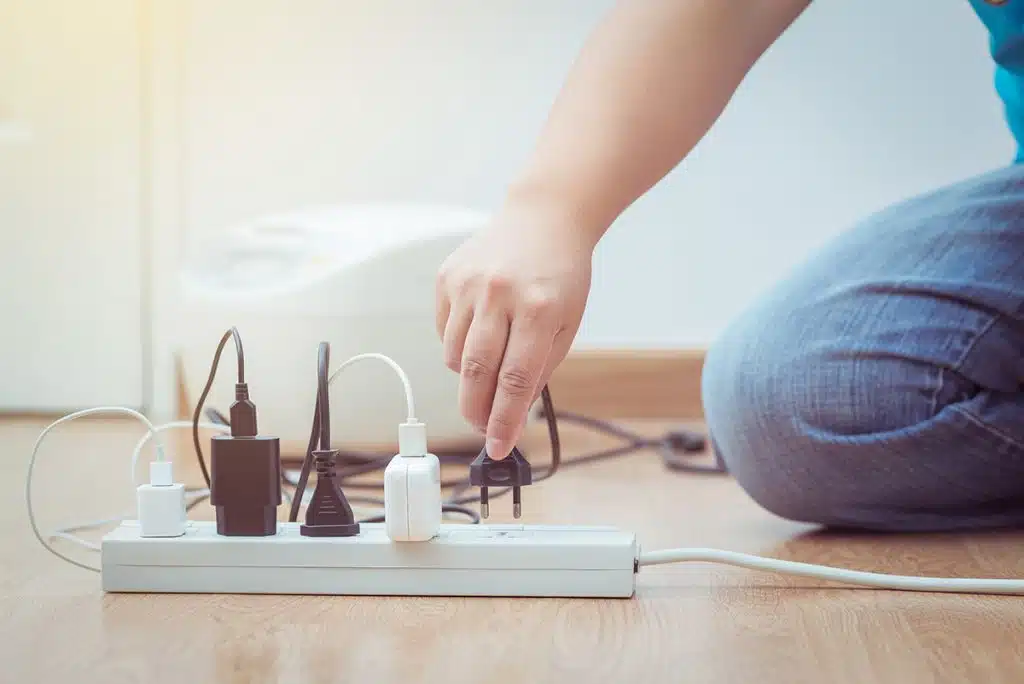
The simplest solution is to purchase whole-house surge protectors. These devices, which look like power strips, automatically redirect excess energy to each outlet’s grounding cable, protecting your appliances. Surge protectors will protect home computers, media units, land-line telephones, cable lines, and motorized appliances, though experts also suggest unplugging major devices during a lightning storm.
It is best to unplug your appliances during a power outage, because a surge may occur when the electricity comes back.
Consider installing a surge protector in the electrical panel, where the circuit breakers or fuses are mounted. During a power surge, the suppressor can channel the extra energy and prevent it from entering the main system. If you live in a storm-prone area, a lightning rod may be a good idea to reduce the damage caused by a direct hit. Finally, check that your insurance covers you if a surge disables your devices despite your best efforts to protect them.
Surge protection: what actually works
There are two layers, and they do different jobs.
A switchboard-mounted surge protection device clamps the big events at the point of entry — the lightning strike down the road, the fault on the network, the supply coming back after an outage. It protects everything in the house, including hard-wired equipment like heat pumps, ovens and garage door motors that you can’t put a plug-in protector on. It’s electrical work and has to be installed by a registered electrician.
A plug-in surge board handles the smaller stuff at the socket and gives sensitive gear a second layer. Look for a joule rating rather than just the word “surge” on the box, and replace them after a serious event — they wear out absorbing hits, often without any visible sign. A cheap multi-box is not a surge protector.
Neither layer helps if the earthing is poor, because a surge protector needs somewhere to divert the excess energy. On older homes, that’s worth checking at the same time. See our surge protection page for how we approach it.
Warning signs your switchboard needs attention
The switchboard is the safety system for the entire house. When it’s failing, it tells you — most people just don’t recognise the signals.
- Circuit breakers tripping or fuses blowing repeatedly, especially on the same circuit
- Lights dimming or flickering when an appliance starts up
- Buzzing or crackling from the board, switches or outlets
- Outlets or switch plates that are warm, discoloured or charred
- Any burning or acrid smell near the board
- A tingle or shock from a switch, outlet or appliance
- Ceramic fuses rather than circuit breakers, or no RCD protection at all
The last one matters most. An RCD (residual current device) cuts power within milliseconds when current leaks to earth — it’s the thing that stops an electric shock becoming fatal. Plenty of Auckland homes built before the 1990s still have boards with no RCD protection on the power or lighting circuits. If yours is one of them, a switchboard upgrade is the highest-value safety work you can do on the house.
Press the test button on your RCD every few months. If it doesn’t trip, it isn’t protecting you.
Winter: the season your wiring works hardest
Electricity use climbs in winter and so do faults. More heaters, more time indoors, more load on circuits that were sized decades ago.
Keep heaters at least a metre clear of curtains, furniture and drying laundry, and never run one on an extension lead or multi-box — high-draw appliances belong in a wall socket on their own. Electric blankets deserve an annual check for scorching, frayed cords or exposed elements; if in doubt, replace rather than repair. Don’t run cords under rugs or carpet where damage goes unseen and heat can’t escape.
Check that smoke alarms work and have fresh batteries. Long-life photoelectric alarms are the current standard and are required in rental properties.
Summer and outdoor safety
Outdoor lighting, garden power and pool or spa equipment all sit in the harshest environment on the property. Look for cracked fittings, perished seals, corroded outdoor sockets and any exposed conductor. Outdoor circuits should be RCD protected and outdoor sockets should be rated for the exposure and fitted with a weatherproof cover.
Before any digging, landscaping or fence work, find out what’s underground. Cables and services are not always where you’d expect them.
Christmas decorations and seasonal lighting
Decorations come out of storage once a year and go back damaged. Inspect every set before it goes up: cracked sockets, missing bulbs, bare or pinched wire, brittle insulation. Anything questionable goes in the bin, not back on the tree.
Use lights rated for the location — indoor sets are not weatherproof, and a set that survived one wet December is not evidence otherwise. Don’t daisy-chain multiple sets beyond the manufacturer’s stated limit, and don’t run everything off one overloaded multi-box. Switch decorative lighting off overnight and when the house is empty. Keep a live tree watered; a dried-out one is a fire load sitting next to a power source.
What to do the moment something looks wrong
If you smell burning, see smoke, or find a hot or discoloured outlet, switch off that circuit at the board and stop using it. If someone has received a shock from an appliance or fitting, isolate the circuit and don’t use it again until it’s been checked — a shock means current is going somewhere it shouldn’t, and it will happen again.
Anything beyond changing a bulb or resetting a breaker is work for a registered electrician. That isn’t a sales line; it’s the law, and it’s the reason electrical work is certified.
Get it checked
An Electrical Warrant of Fitness covers the whole installation — board, circuits, RCDs, earthing, outlets and fittings — and gives you a written record of what’s safe and what needs work. It’s the sensible starting point if you’ve bought an older home, or if any of the warning signs above sound familiar.
To arrange an inspection, surge protection or a switchboard upgrade, call French Electrical on 09 274 8082, or see our pricing page for how we charge.